Want gorgeous, healthy hair? You might be surprised to learn that cholesterol, often viewed negatively in relation to heart health, plays a beneficial role in hair health! This instructional guide will show you how to harness its power for stronger, shinier, more manageable hair. We’ll explore the science, compare application methods, and address potential drawbacks, helping you create a customized routine for your hair type.
Understanding Cholesterol's Role in Hair Health
Cholesterol, a type of fat, is crucial for building and maintaining healthy cell membranes throughout your body, including your hair follicles. Think of your hair shaft as a tiny rope; cholesterol acts as a protective coating, keeping the outer layer (the cuticle) smooth and strong. This smoothness contributes to shine. Damage to this protective layer leads to dryness, brittleness, and frizz. Cholesterol helps repair and protect this vital layer. Isn't it fascinating how such a widely discussed lipid plays such a vital role in achieving healthy, shiny hair?
The Science Behind the Shine: A Deeper Dive
Each hair strand is encased in a lipid bilayer—a thin, protective layer like an invisible raincoat. This bilayer, composed of fats and oils, includes cholesterol. A healthy lipid bilayer keeps hair moisturized, elastic, and resilient. Damage from heat styling, coloring, or harsh chemicals compromises this layer. Cholesterol helps replenish and repair these natural oils, resulting in healthier, stronger hair. This scientific basis highlights the true potential of cholesterol in hair care.
Tailoring Your Approach: Different Hair Types, Different Needs
A "one-size-fits-all" approach won't work. What suits thick hair may weigh down fine hair, so tailoring your cholesterol hair treatment is crucial.
- Fine Hair: Use sparingly, perhaps monthly or less frequently. A little goes a long way; excessive use can lead to a greasy look.
- Thick/Coarse Hair: More frequent use (weekly or more) might be beneficial, depending on your hair's response. You can experiment with more concentrated treatments.
- Damaged Hair: Cholesterol treatments can be particularly effective in repairing the cuticle and restoring moisture levels. Are your split ends making you worried? Incorporating cholesterol may just help you solve this problem!
Cholesterol Treatments: DIY vs. Store-Bought
You can incorporate cholesterol into your routine through DIY masks or commercial products.
1. Homemade Masks: The DIY Approach
Homemade cholesterol-rich masks are popular. Egg yolks and mayonnaise, naturally rich in cholesterol and other beneficial nutrients, are common choices.
Step-by-Step Guide (Egg Yolk & Mayonnaise Mask):
- Gather ingredients: 2-3 large egg yolks and 1 tablespoon of mayonnaise.
- Mix: Gently whisk until smooth and creamy.
- Apply: Evenly to damp hair, focusing on lengths and ends; avoid the scalp to prevent buildup.
- Wait: Leave on for 15-30 minutes (shorter for fine hair, longer for thicker hair).
- Rinse: Thoroughly with cool water. Follow with your regular conditioner.
Important Note: Always perform a patch test before full application to check for allergies. This simple precaution can prevent potential skin reactions and ensures a safe and enjoyable experience.
2. Commercial Products: The Convenient Route
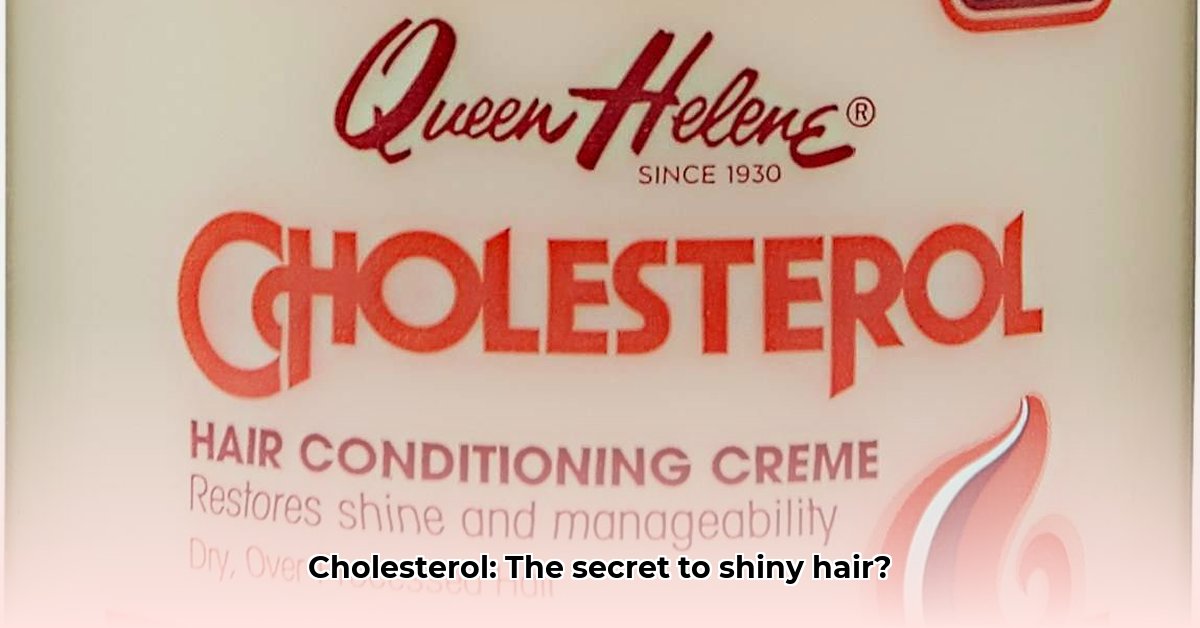
Commercially available hair products containing cholesterol or cholesterol-like lipids offer precise concentrations and consistent application. Always follow manufacturer instructions.
Weighing the Pros and Cons: Making an Informed Decision
Like any treatment, consider both advantages and potential drawbacks.
| Pros | Cons |
|---|---|
| Increased shine and moisture | Potential for greasiness (fine hair) |
| Improved elasticity and strength | Requires monitoring and adjustment |
| Cost-effective homemade options | May not suit all hair types |
| Can repair damaged hair | Requires a patch test before full application |
Remember moderation is key! Overuse can lead to product buildup, resulting in heavy, greasy hair. Start with infrequent applications and observe your hair's response.
Addressing Concerns and Future Research
While many report positive results, large-scale studies on long-term effects are limited. More research is needed. Individual reactions vary widely. What works for one person might not work for another. Proceed cautiously, starting with small amounts and observing your hair's response.
In short, incorporating cholesterol is a journey of experimentation and discovery. Pay close attention to your hair's reaction, and adjust accordingly. With patience and observation, you might unlock the secret to healthier, shinier hair.